Structure and Interpretation of Computer Programs, Second Edition
Harold Abelson, Gerald Jay Sussman, Julie Sussman
With an analytical and rigorous approach to problem solving and programming techniques, this book is oriented toward engineering. Structure and Interpretation of Computer Programs emphasizes the central role played by different approaches to dealing with time in computational models. Its unique approach makes it appropriate for an introduction to computer science courses, as well as programming languages and program design.
Compilers: Principles, Techniques, and Tools
Alfred V. Aho, Ravi Sethi, Jeffrey D. Ullman
This introduction to compilers is the direct descendant of the well-known book by Aho and Ullman, Principles of Compiler Design. The authors present updated coverage of compilers based on research and techniques that have been developed in the field over the past few years. The book provides a thorough introduction to compiler design and covers topics such as context-free grammars, fine state machines, and syntax-directed translation. 0201100886B04062001
Python Essential Reference
David Beazley
Python Essential Reference, Second Edition, is the definitive guide to the Python programming language. Designed for programmers, it covers the core language, more than 100 modules in the standard library, and the techniques used to extend Python with compiled procedures in C or C++. Coverage expands upon and clarifies existing Python documentation - especially for advanced topics, including operating system interfaces, threads, network programming, and Unicode.
Concise, to the point, and extensively indexed, readers will find this volume packed with information not previously available in any other single reference source. Updated for Python 2.1, it is a must-have for any serious programmer wanting to develop advanced Python applications.
As a comprehensive reference to the Python programming language, this book will help you: Learn about the features in Python 2.0 and 2.1Master the details of Python types, operators, and the execution modelDiscover the details of Unicode and internationalization supportLearn the details of operating system interfaces, threads, and network-programming modulesBuild C/C++ extensions to PythonMake effective use of the Python libraryFind the information you need to start developing advanced Python applications
Organic Chemistry of Enzyme-Catalyzed Reactions, Revised Edition, Second Edition
Richard B. Silverman Ph.D Organic Chemistry
The Organic Chemistry of Enzyme-Catalyzed Reactions is not a book on enzymes, but rather a book on the general mechanisms involved in chemical reactions involving enzymes. An enzyme is a protein molecule in a plant or animal that causes specific reactions without itself being permanently altered or destroyed.
This is a revised edition of a very successful book, which appeals to both academic and industrial markets.
Illustrates the organic mechanism associated with each enzyme-catalyzed reaction
Makes the connection between organic reaction mechanisms and enzyme mechanisms
Compiles the latest information about molecular mechanisms of enzyme reactions
Accompanied by clearly drawn structures, schemes, and figures
Includes an extensive bibliography on enzyme mechanisms covering the last 30 years
Explains how enzymes can accelerate the rates of chemical reactions with high specificity
Provides approaches to the design of inhibitors of enzyme-catalyzed reactions
Categorizes the cofactors that are appropriate for catalyzing different classes of reactions
Shows how chemical enzyme models are used for mechanistic studies
Describes catalytic antibody design and mechanism
Includes problem sets and solutions for each chapter
Written in an informal and didactic style
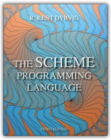
The Scheme Programming Language
R. Kent Dybvig
This thoroughly updated edition of The Scheme Programming Language provides an introduction to Scheme and a definitive reference for standard Scheme, presented in a clear and concise manner. Written for professionals and students with some prior programming experience, it begins by leading the programmer gently through the basics of Scheme and continues with an introduction to some of the more advanced features of the language. Many exercises are presented to help reinforce the lessons learned, and answers to the exercises are given in a new appendix. Most of the remaining chapters are dedicated to the reference material, which describes in detail the standard features of Scheme included in the Revised Report on Scheme and the ANSI/IEEE standard for Scheme.Numerous examples are presented throughout the introductory and reference portions of the text, and a unique set of extended example programs and applications, with additional exercises, are presented in the final chapter. Reinforcing the book's utility as a reference text are appendixes that present the formal syntax of Scheme, a summary of standard forms and procedures, and a bibliography of Scheme resources. The Scheme Programming Language stands alone as an introduction to and essential reference for Scheme programmers. It is also useful as a supplementary text for any course that uses Scheme.The Scheme Programming Language is illustrated by artist Jean-Pierre Hebert, who writes Scheme programs to extend his ability to create sophisticated works of digital art.
The Schemers Guide
Iain Ferguson
Immunology, Fifth Edition
Richard A. Goldsby, Thomas J. Kindt, Janis Kuby, Barbara A. Osborne
The new edition of the acclaimed bestseller, always praised for offering cutting edge material in the context of landmark experiments, in a student friendly format built on pedagogy not usually found in immunology texts.
Advanced Engineering Mathematics
Michael Greenberg
This clear, pedagogically rich book develops a strong understanding of the mathematical principles and practices that today's engineers need to know. Equally as effective as either a textbook or reference manual, it approaches mathematical concepts from an engineering perspective, making physical applications more vivid and substantial. Its comprehensive instructional framework supports a conversational, down-to-earth narrative style, offering easy accessibility and frequent opportunities for application and reinforcement.
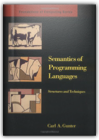
Semantics of Programming Languages: Structures and Techniques
Carl A. Gunter
Semantics of Programming Languages exposes the basic motivations and philosophy underlying the applications of semantic techniques in computer science. It introduces the mathematical theory of programming languages with an emphasis on higher-order functions and type systems. Designed as a text for upper-level and graduate-level students, the mathematically sophisticated approach will also prove useful to professionals who want an easily referenced description of fundamental results and calculi.Basic connections between computational behavior, denotational semantics, and the equational logic of functional programs are thoroughly and rigorously developed. Topics covered include models of types, operational semantics, category theory, domain theory, fixed point (denotational). semantics, full abstraction and other semantic correspondence criteria, types and evaluation, type checking and inference, parametric polymorphism, and subtyping. All topics are treated clearly and in depth, with complete proofs for the major results and numerous exercises.
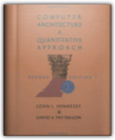
Computer Architecture: A Quantitative Approach, Second Edition
John L. Hennessy, David A. Patterson
"Once in a great while, a landmark computer-science book is published. Computer Architecture: A Quantitative Approach, Second Edition, is such a book. In an era of fluff computer books that are, quite properly, remaindered within weeks of publication, this book will stand the test of time, becoming lovingly dog-eared in the hands of anyone who designs computers or has concerns about the performance of computer programs." - Robert Bernecky, Dr. Dobb's Journal, April 1998
Computer Architecture: A Quantitative Approach was the first book to focus on computer architecture as a modern science. Its publication in 1990 inspired a new approach to studying and understanding computer design. Now, the second edition explores the next generation of architectures and design techniques with view to the future.
A basis for modern computer architecture
As the authors explain in their preface to the Second Edition, computer architecture itself has undergone significant change since 1990. Concentrating on currently predominant and emerging commercial systems, the Hennessy and Patterson have prepared entirely new chapters covering additional advanced topics:
* Advanced Pipelining: A new chapter emphasizes superscalar and multiple issues.
* Networks: A new chapter examines in depth the design issues for small and large shared-memory multiprocessors.
* Storage Systems: Expanded presentation includes coverage of I/O performance measures.
* Memory: Expanded coverage of caches and memory-hierarchy design addresses contemporary design issues.
* Examples and Exercises: Completely revised on current architectures such as MIPS R4000, Intel 80x86 and Pentium, PowerPC, and HP PA-RISC.
Distinctive presentation
This book continues the style of the first edition, with revised sections on Fallacies and Pitfalls, Putting It All Together and Historical Perspective, and contains entirely new sections on Crosscutting Issues. The focus on fundamental techniques for designing real machines and the attention to maximizing cost/performance are crucial to both students and working professionals. Anyone involved in building computers, from palmtops to supercomputers, will profit from the expertise offered by Hennessy and Patterson.
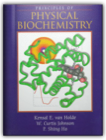
Principles of Physical Biochemistry
Kensal E van Holde, Curtis Johnson, Pui Shing Ho
This book offers the most up-to-date look at the theory and techniques used in the study of the physical chemistry of biological and biochemical molecules. Ken van Holde is one of the leading experts in biophysical chemistry and a well-known author (he is coauthor of an introductory biochemistry book). Comprehensive coverage of all physical techniques currently used by practicing biochemists, including. Up-to-date treatment of NMR and X-ray diffraction. Comprehensive coverage of other types of spectroscopy.
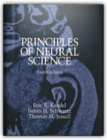
Principles of Neural Science
Eric Kandel, James Schwartz, Thomas Jessell
A Doody's Core Title for 2011!
5 STAR DOODY'S REVIEW!
"This is a simply wonderful book that makes accessible in one place all the details of how the neuron and brain work. The writing is clear. The drawings are elegant and educational. The book is a feast for both the eye and mind. The richness, the beauty, and the complexity of neuroscience is all captured in this superb book."—Doody's Review Service Now in resplendent color, the new edition continues to define the latest in the scientific understanding of the brain, the nervous system, and human behavior. Each chapter is thoroughly revised and includes the impact of molecular biology in the mechanisms underlying developmental processes and in the pathogenesis of disease. Important features to this edition include a new chapter - Genes and Behavior; a complete updating of development of the nervous system; the genetic basis of neurological and psychiatric disease; cognitive neuroscience of perception, planning, action, motivation and memory; ion channel mechanisms; and much more.
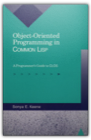
Object-Oriented Programming in COMMON LISP: A Programmer's Guide to CLOS
Sonya E. Keene
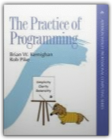
The Practice of Programming
Brian W. Kernighan, Rob Pike
Provides advice, real-world examples in C, C++, Java, and a variety of special purpose languages. Includes debugging, testing, performance, portability, design, interfaces, style, and notation. Softcover. DLC: Computer programming.
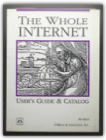
The Whole Internet User's Guide & Catalog
Ed Krol
A comprehensive introduction to the Internet, the international network that includes virtually every major computer site in the world, this book offers access to the Internet's resources: e-mail and news, public archives, databases, and special services ranging from NASA announcements to ski reports. Whether you're a researcher, student, or just someone who likes to send electronic mail to friends, the Internet is a resource of almost unimaginable wealth.
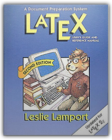
LaTeX: A Document Preparation System
Leslie Lamport
This authoritative user's guide and reference manual for the LATEX computer typesetting system has been revised to document features now available in the new standard software release - LATEX2e. The new edition features additional styles and functions, improved font handling, and enhanced graphics capabilities. Other parts of the book have been revised to reflect user comments and suggestions. Selected sections have been rewritten to explain challenging concepts or functions, and the descriptions of both MakeIndex and BibTEX have been updated. New LATEX users will want to start with this book, and current users, particularly as they upgrade to the LATEX2e software, will be eager to obtain the most up-to-date version of its associated manual. Features *Revised version of the authoritative user's guide and reference manual for the LATEX computer typesetting system. *Features the new standard software release - LATEX2e. *Sections rewritten to explain difficult concepts or functions. 0201529831B04062001
Principles of Biochemistry
Albert L. Lehninger, David L. Nelson, Michael M. Cox
Great Biochemistry text used in Medical School courses.
Biological Physics: Energy, Information, Life
Philip Nelson
Physics and engineering departments are building research programs in biological physics, but until now there has not been a synthesis of this dynamic field at the undergraduate level. Biological Physics focuses on new results in molecular motors, self-assembly, and single-molecule manipulation that have revolutionized the field in recent years, and integrates these topics with classical results. The text also provides foundational material for the emerging field of nanotechnology. The text is built around a self-contained core geared toward undergraduate students who have had one year of calculus-based physics. Additional "Track-2" sections contain more advanced material for senior physics majors and graduate students.
Grammatika v kontekste: Russian Grammar in Literary Contexts
Benjamin Rifkin
Grammatika v kontekste: (Grammar in Context) is an instructional program designed to help students review, systematize, and add to the knowledge of Russian that they acquired in previous courses. Appropriate for use in intermediate or advanced Russian courses, the text covers the essential topics and functions of Russian. Grammatical points are illustrated in reading texts that include non-literary, as well as literary selections. The complete package includes a text, workbook/laboratory manual, audiocassette program, and an instructor's manual.
Practical Aspects of Declarative Languages: 14th International Symposium, PADL 2012, Philadelphia, PA, January 23-24, 2012. Proceedings
Claudio Russo, Neng-Fa Zhou
This book constitutes the refereed proceedings of the 14th International Symposium on Practical Aspects of Declarative Languages, PADL 2012, held in Philadelphia, PA, USA, in January 2012, co-located with POPL 2012, the 39th Symposium on Principles of Programming Languages. The 38 revised technical papers presented together with 3 application papers were carefully reviewed and selected from 52 submissions. The volume features original work emphasizing new ideas and approaches pertaining to applications and implementation techniques of declarative languages and addresses topics such as innovative applications of declarative languages, declarative domain-specific languages and applications, practical applications of theoretical results, new language developments and their impact on applications, evaluation of implementation techniques on practical applications, novel implementation techniques relevant to applications, novel uses of declarative languages in the classroom, and practical experiences.
The Handbook of Programming Languages (HPL): Imperative Programming Languages
Peter Salus, Peter H. Salus
This handbook covers imperative programming languages. There are chapters on FORTRAN, C, Turbo Pascal and Icon. For each language, information on history, syntax, variables, tips and traps is provided.
Programming Languages: Concepts and Constructs
Ravi Sethi
Programming Languages: Concepts and Constructs, Second Edition retains the "character" of the original, emphasizing concepts and how they work together. This classic book has been thoroughly revised to provide readable coverage of the major programming paradigms. Dr. Sethi's treatment of the core concepts of imperative programming in languages like Pascal and C flows smoothly into object-oriented programming in C++ and Smalltalk. The charm of functional languages is illustrated by programs in standard ML and the Scheme dialect of Lisp. Logic programming is introduced using Prolog. Novices, who have been introduced to programming in some language, will learn from this book how related concepts work together while designers and implementers willp be exposed to the major programming paradigms. Example programs from the book are available as source code. These are available by anonymous ftp at ftp://ftp.aw.com/cseng/authors/sethi/pl2e. 0201590654B04062001
Operating System Concepts, 5th Edition
Abraham Silberschatz, Bill Zorbrist, Peter Galvin
This textbook provides coverage of the fundamental concepts which make up the foundation of operating systems and also gives practical experience with a fully functioning instructional operating system called NACHOS. This edition also features new chapters on the history of the operating systems and on computer ethics, as well as a further case study on WindowsNT. Memory management, including modern computer architectures and file system design and implementation are also covered. Common operating systems (MS-DOS, OS/2, Sun OS5 and Macintosh) are used throughout to illustrate concepts and provide examples of performance characteristics.
Principles of Instrumental Analysis, 5th Edition
Douglas A. Skoog, F. James Holler, Timothy A. Nieman
This text is written for a course that deals with the principles and applications of modern analytical instruments. Emphasis is placed upon the theoretical basis of each type of instrument, its optimal area of application, its sensitivity, its precision, and its limitations. The text also introduces students to elementary integrated circuitry, microprocessors and computers, and treatment of analytical data.
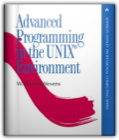
Advanced Programming in the UNIX
W. Richard Stevens
Bestselling UNIX author W. Richard Stevens offers application developers and system programmers his professional, experience-based guidance on using the system call interface with C. In the first half of the book, Stevens describes more than 200 system calls and functions with a brief example program following each description. Having provided the basics, Stevens moves on to chapter-long examples. The book is applicable to all major UNIX releases, especially System V Release 4-including Solaris 2-and 4.4 BSD, including 386 BSD.
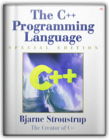
The C++ Programming Language: Special Edition
Bjarne Stroustrup
More than three-quarters of a million programmers have benefited from this book in all of its editions
Written by Bjarne Stroustrup, the creator of C++, this is the world's most trusted and widely read book on C++.
For this special hardcover edition, two new appendixes on locales and standard library exception safety (also available at www.research.att.com/~bs/) have been added. The result is complete, authoritative coverage of the C++ language, its standard library, and key design techniques. Based on the ANSI/ISO C++ standard, The C++ Programming Language provides current and comprehensive coverage of all C++ language features and standard library components.
For example:abstract classes as interfacesclass hierarchies for object-oriented programmingtemplates as the basis for type-safe generic softwareexceptions for regular error handlingnamespaces for modularity in large-scale softwarerun-time type identification for loosely coupled systemsthe C subset of C++ for C compatibility and system-level workstandard containers and algorithmsstandard strings, I/O streams, and numericsC compatibility, internationalization, and exception safetyBjarne Stroustrup makes C++ even more accessible to those new to the language, while adding advanced information and techniques that even expert C++ programmers will find invaluable.
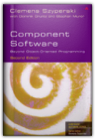
Component Software: Beyond Object-Oriented Programming
Clemens Szyperski
The author describes his book as a "unique blend of market and technology coverage, broad and fair coverage of current technologies and a deep discussion of real problems with their solutions where known". The first edition won the "Jolt Award" became the leading book on the market to combine explanations of what the key technologies are, how to use them and why they are important in the software market-place, and look at these in terms of both the technical and business issues. The book was also the first to define components and clarify the key questions surrounding them, show how they are key to software design and offer a historical overview of their development.
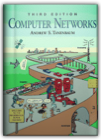
Computer Networks
Andrew S. Tanenbaum
New edition of the classic best-seller. Takes a structured approach to networking, starting at the bottom and gradually working up to the top. DLC: Computer networks.
|


 Made with Delicious Library