|
Capital - A Critique of Political Economy: Volume 1-The Process of Capitalist Production

Info Box: The Catalogue

Aeschylus I: Oresteia: Agamemnon, The Libation Bearers, The Eumenides
"This is it. No qualifications. Go out and buy it everybody."—Kenneth Rexroth, The Nation "The translations deliberately avoid the highly wrought and affectedly poetic; their idiom is contemporary....They have life and speed and suppleness of phrase."—Times Education Supplement "These translations belong to our time. A keen poetic sensibility repeatedly quickens them; and without this inner fire the most academically flawless rendering is dead."—Warren D. Anderson, American Oxonian "The critical commentaries and the versions themselves...are fresh, unpretentious, above all, functional."—Commonweal "Grene is one of the great translators."—Conor Cruise O'Brien, London Sunday Times "Richmond Lattimore is that rara avis in our age, the classical scholar who is at the same time an accomplished poet."—Dudley Fitts, New York Times Book Review Lysistrata/The Acharnians/The Clouds
@PussyWhip What’s something we can leverage against men? What’s the one thing we’re good for again? It’s on the tip of my tongue. From Twitterature: The World's Greatest Books in Twenty Tweets or Less The Knights; Peace; The Birds; The Assembly Women; Wealth

Winter Trails Vermont and New Hampshire, 2nd: The Best Cross-Country Ski & Showshoe Trails

The Bacchae of Euripides: A New Translation with a Critical Essay
Euripides IV: Rhesus / The Suppliant Women / Orestes / Iphigenia in Aulis
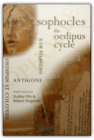
Sophocles, The Oedipus Cycle: Oedipus Rex, Oedipus at Colonus, Antigone
Mirror Worlds: Or: The Day Software Puts the Universe in a Shoebox...How It Will Happen and What It Will Mean
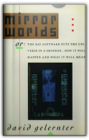
Imagine looking at your computer screen and seeing reality—an image of your city, for instance, complete with moving traffic patterns, or a picture that sketches the state of an entire far-flung corporation at this second. These representations are called Mirror Worlds, and according to Gelernter they will soon be available to everyone. Mirror Worlds are high-tech voodoo dolls: by interacting with the images, you interact with reality. Indeed, Mirror Worlds will revolutionize the use of computers, transforming them from (mere) handy tools to crystal balls which will allow us to see the world more vividly and see into it more deeply. Reality will be replaced gradually, piece-by-piece, by a software imitation; we will live inside the imitation; and the surprising thing is—this will be a great humanistic advance. We gain control over our world, plus a huge new measure of insight and vision. In this fascinating book—part speculation, part explanation—Gelernter takes us on a tour of the computer technology of the near future. Mirror Worlds, he contends, will allow us to explore the world in unprecedented depth and detail without ever changing out of our pajamas. A hospital administrator might wander through an entire medical complex via a desktop computer. Any citizen might explore the performance of the local schools, chat electronically with teachers and other Mirror World visitors, plant software agents to report back on interesting topics; decide to run for the local school board, hire a campaign manager, and conduct the better part of the campaign itself—all by interacting with the Mirror World. Gelernter doesn't just speculate about how this amazing new software will be used—he shows us how it will be made, explaining carefully and in detail how to build a Mirror World using technology already available. We learn about "disembodied machines," "trellises," "ensembles," and other computer components which sound obscure, but which Gelernter explains using familiar metaphors and terms. (He tells us that a Mirror World is a microcosm just like a Japanese garden or a Gothic cathedral, and that a computer program is translated by the computer in the same way a symphony is translated by a violinist into music.) Mirror Worlds offers a lucid and humanistic account of the coming software revolution, told by a computer scientist at the cutting edge of his field. The Mismeasure of Man
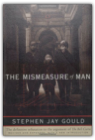
Yet the idea of biology as destiny dies hard, as witness the attention devoted to The Bell Curve, whose arguments are here so effectively anticipated and thoroughly undermined. In this edition, Stephen Jay Gould has written a substantial new introduction telling how and why he wrote the book and tracing the subsequent history of the controversy on innateness right through The Bell Curve. Further, he has added five essays on questions of The Bell Curve in particular and on race, racism, and biological determinism in general. These additions strengthen the book's claim to be, as Leo J. Kamin of Princeton University has said, "a major contribution toward deflating pseudo-biological 'explanations' of our present social woes." The Art and Craft of Teaching

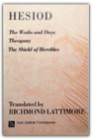
The Works and Days; Theogony; The Shield of Herakles
Daphnis and Chloe
Innumeracy: Mathematical Illiteracy and Its Consequences
Beyond Numeracy
Troilus and Cressida
Hamlet

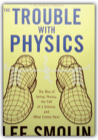
The "Intellectual Backgrounds" and "Extracts from the Sources" sections, both highly praised, remain as germane as ever. Intellectual Backgrounds includes important readings on melancholy, demonology, the nature of man, and death, including works by Peter de la Primaudaye, Timothy Bright, Lewes Lavater, G. Gifford, Michel de Montaigne, and Heironymous Cardanus. Extracts from the Sources provides pre-Shakespearean accounts of the story of Hamlet, reprinting substantial excerpts from Saxo Grammaticus's Historia Danica and Belleforest's Histoires Tragiques. "Criticism" has been revised to accommodate the most significant recent interpretations of Hamlet while retaining the seminal essays of the First Edition. Twenty-three critical analyses are featured, including those by Samuel Johnson, Johann Wolfgang von Goethe, Samuel Taylor Coleridge, William Hazlitt, A. C. Bradley, D. H. Lawrence, T. S. Eliot, G. Wilson Knight, C. S. Lewis, Harry Levin, Peter J. Seng, Rebecca West, Arnold Kettle, Margaret W. Ferguson, Jacqueline Rose, and William Empson. An updated Selected Bibliography is also included. The Trouble With Physics: The Rise of String Theory, The Fall of a Science, and What Comes Next
Sophocles II: Ajax, The Women of Trachis, Electra & Philoctetes
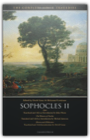
"This is it. No qualifications. Go out and buy it everybody."—Kenneth Rexroth, The Nation "The translations deliberately avoid the highly wrought and affectedly poetic; their idiom is contemporary....They have life and speed and suppleness of phrase."—Times Education Supplement "These translations belong to our time. A keen poetic sensibility repeatedly quickens them; and without this inner fire the most academically flawless rendering is dead."—Warren D. Anderson, American Oxonian "The critical commentaries and the versions themselves...are fresh, unpretentious, above all, functional."—Commonweal "Grene is one of the great translators."—Conor Cruise O'Brien, London Sunday Times "Richmond Lattimore is that rara avis in our age, the classical scholar who is at the same time an accomplished poet."—Dudley Fitts, New York Times Book Review Rosencrantz and Guildenstern Are Dead

Why Things Bite Back: Technology and the Revenge of Unintended Consequences

Bicycling Science

Four Colors Suffice: How the Map Problem Was Solved
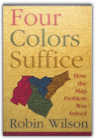
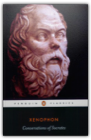
The problem posed in the letter came from a former student: What is the least possible number of colors needed to fill in any map (real or invented) so that neighboring counties are always colored differently? This deceptively simple question was of minimal interest to cartographers, who saw little need to limit how many colors they used. But the problem set off a frenzy among professional mathematicians and amateur problem solvers, among them Lewis Carroll, an astronomer, a botanist, an obsessive golfer, the Bishop of London, a man who set his watch only once a year, a California traffic cop, and a bridegroom who spent his honeymoon coloring maps. In their pursuit of the solution, mathematicians painted maps on doughnuts and horseshoes and played with patterned soccer balls and the great rhombicuboctahedron. It would be more than one hundred years (and countless colored maps) later before the result was finally established. Even then, difficult questions remained, and the intricate solution—which involved no fewer than 1,200 hours of computer time—was greeted with as much dismay as enthusiasm. Providing a clear and elegant explanation of the problem and the proof, Robin Wilson tells how a seemingly innocuous question baffled great minds and stimulated exciting mathematics with far-flung applications. This is the entertaining story of those who failed to prove, and those who ultimately did prove, that four colors do indeed suffice to color any map. Conversations of Socrates
|


My Library
Collection Total:
1320 Items
1320 Items
Last Updated:
Apr 14, 2013
Apr 14, 2013
 Made with Delicious Library