|
After Thought: The Computer Challenge To Human Intelligence
Flags of Our Fathers

In February 1945, American Marines plunged into the surf at Iwo Jima—and into history. Through a hail of machine-gun and mortar fire that left the beaches strewn with comrades, they battled to the island's highest peak. And after climbing through a landscape of hell itself, they raised a flag. Now the son of one of the flagraisers has written a powerful account of six very different young men who came together in a moment that will live forever. To his family, John Bradley never spoke of the photograph or the war. But after his death at age seventy, his family discovered closed boxes of letters and photos. In Flags of Our Fathers, James Bradley draws on those documents to retrace the lives of his father and the men of Easy Company. Following these men's paths to Iwo Jima, James Bradley has written a classic story of the heroic battle for the Pacific's most crucial island—an island riddled with Japanese tunnels and 22,000 fanatic defenders who would fight to the last man. But perhaps the most interesting part of the story is what happened after the victory. The men in the photo—three were killed during the battle—were proclaimed heroes and flown home, to become reluctant symbols. For two of them, the adulation was shattering. Only James Bradley's father truly survived, displaying no copy of the famous photograph in his home, telling his son only: "The real heroes of Iwo Jima were the guys who didn't come back." Few books ever have captured the complexity and furor of war and its aftermath as well as Flags of Our Fathers. A penetrating, epic look at a generation at war, this is history told with keen insight, enormous honesty, and the passion of a son paying homage to his father. It is the story of the difference between truth and myth, the meaning of being a hero, and the essence of the human experience of war. The Hero with a Thousand Faces
The first popular work to combine the spiritual and psychological insights of modern psychoanalysis with the archetypes of world mythology, the book creates a roadmap for navigating the frustrating path of contemporary life. Examining heroic myths in the light of modern psychology, it considers not only the patterns and stages of mythology but also its relevance to our lives today—and to the life of any person seeking a fully realized existence. Myth, according to Campbell, is the projection of a culture's dreams onto a large screen; Campbell's book, like Star Wars, the film it helped inspire, is an exploration of the big-picture moments from the stage that is our world. It is a must-have resource for both experienced students of mythology and the explorer just beginning to approach myth as a source of knowledge. Shampoo Planet

Forging Democracy: The History of the Left in Europe, 1850-2000
Neither given nor granted, democracy requires conflict, often violent confrontations, and challenges to the established political order. In Europe, Geoff Eley convincingly shows, democracy did not evolve organically out of a natural consensus, the achievement of prosperity, or the negative cement of the Cold War. Rather, it was painstakingly crafted, continually expanded, and doggedly defended by varying constellations of socialist, feminist, Communist, and other radical movements that originally blossomed in the later nineteenth century. Parties of the Left championed democracy in the revolutionary crisis after World War I, salvaged it against the threat of fascism, and renewed its growth after 1945. They organized civil societies rooted in egalitarian ideals which came to form the very fiber of Europe's current democratic traditions. The trajectories of European democracy and the history of the European Left are thus inextricably bound together. Geoff Eley has given us the first truly comprehensive history of the European Left—its successes and failures; its high watermarks and its low tides; its accomplishments, insufficiencies, and excesses; and, most importantly, its formative, lasting influence on the European political landscape. At a time when the Left's influence and legitimacy are frequently called into question, Forging Democracy passionately upholds its vital contribution. Paul Revere's Ride
In Paul Revere's Ride, David Hackett Fischer fashions an exciting narrative that offers deep insight into the outbreak of revolution and the emergence of the American republic. Beginning in the years before the eruption of war, Fischer illuminates the figure of Paul Revere, a man far more complex than the simple artisan and messenger of tradition. Revere ranged widely through the complex world of Boston's revolutionary movement—from organizing local mechanics to mingling with the likes of John Hancock and Samuel Adams. When the fateful night arrived, more than sixty men and women joined him on his task of alarm—an operation Revere himself helped to organize and set in motion. Fischer recreates Revere's capture that night, showing how it had an important impact on the events that followed. He had an uncanny gift for being at the center of events, and the author follows him to Lexington Green—setting the stage for a fresh interpretation of the battle that began the war. Drawing on intensive new research, Fischer reveals a clash very different from both patriotic and iconoclastic myths. The local militia were elaborately organized and intelligently led, in a manner that had deep roots in New England. On the morning of April 19, they fought in fixed positions and close formation, twice breaking the British regulars. In the afternoon, the American officers switched tactics, forging a ring of fire around the retreating enemy which they maintained for several hours—an extraordinary feat of combat leadership. In the days that followed, Paul Revere led a new battle— for public opinion—which proved even more decisive than the fighting itself. ] When the alarm-riders of April 18 took to the streets, they did not cry, "the British are coming," for most of them still believed they were British. Within a day, many began to think differently. For George Washington, Thomas Jefferson, John Adams, and Thomas Paine, the news of Lexington was their revolutionary Rubicon. Paul Revere's Ride returns Paul Revere to center stage in these critical events, capturing both the drama and the underlying developments in a triumphant return to narrative history at its finest. Emo's Great Story

The Day the War Ended: May 8, 1945 : Victory in Europe
Memoirs of a Geisha: A Novel
Speaking to us with the wisdom of age and in a voice at once haunting and startlingly immediate, Nitta Sayuri tells the story of her life as a geisha. It begins in a poor fishing village in 1929, when, as a nine-year-old girl with unusual blue-gray eyes, she is taken from her home and sold into slavery to a renowned geisha house. We witness her transformation as she learns the rigorous arts of the geisha: dance and music; wearing kimono, elaborate makeup, and hair; pouring sake to reveal just a touch of inner wrist; competing with a jealous rival for men's solicitude and the money that goes with it. In Memoirs of a Geisha, we enter a world where appearances are paramount; where a girl's virginity is auctioned to the highest bidder; where women are trained to beguile the most powerful men; and where love is scorned as illusion. It is a unique and triumphant work of fiction—at once romantic, erotic, suspenseful—and completely unforgettable. Red Vienna: Experiment in Working-Class Culture, 1919-1934
The Dark Wind

While Standing on One Foot: Puzzle Stories and Wisdom Tales from the Jewish Tradition
Red Diapers: GROWING UP IN THE COMMUNIST LEFT
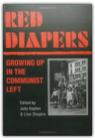
Red Diapers is the first anthology of autobiographical writings by the children of American communists. These memoirs, short stories, and poems reflect the joys and perils of growing up in a subculture defined by its opposition to society's most deeply held values. How red diaper children have come to terms with their political inheritance is the theme of this compelling anthology. Some contributors have fond memories of family activism, others recall the past with ambivalence or even pain. The authors range in age from their twenties to their eighties. Some, such as Watergate reporter Carl Bernstein and sixties activist Bettina Aptheker, are widely known themselves; some are the children of well-known American leftists, including Jeff Lawson, son of blacklisted screenwriter John Howard Lawson, and Robert Meeropol, son of Ethel and Julius Rosenberg. in disparate voices, the contributors elaborate on how their parents attempted to pass on to them the torch of radical politics. Quinn's Book
Big Trouble: A Murder in a Small Western Town Sets Off a Struggle for the Soul of America
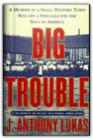
J. Anthony Lukas, a masterful storyteller, tells a mesmerizing tale — of a terrible murder, a great trial, and the struggle they set off for the soul of America. Big Trouble begins on a snowy evening at Christmas time 1905 in the little town of Caldwell, Idaho, to which the state's former governor, Frank Steunenberg, had returned to head his family bank while contemplating his political future. As he walked home that night, he sensed all about him the bold, exuberant, unashamedly acquisitive spirit of Caldwell's young entrepreneurs, who — as his brother had written — were "here for the money." Like so many in the West at that time, these brothers believed their prospects for enriching themselves were limitless, that the future opened wide before them. ANd yet the governor suffered premonitions that he and his neighbors weren't fully in control of their own destiny, that something malign threatened their well-being. Now, as he followed the plume of his frozen breath, his boots crunching eight inches of freshly frozen snow, he turned through his garden gate and a bomb attached to the gatepost blew him "into eternity." The Man Who Smiled
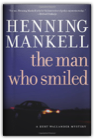
The Man Who Smiled begins with Wallander deep in a personal and professional crisis after killing a man in the line of duty; eventually, he vows to quit the Ystad police force for good. Just then, however, a friend who had asked Wallander to look into the death of his father winds up dead himself, shot three times. Ann-Britt Höglund, the department's first female detective, proves to be his best ally as he tries to pierce the smiling façade of his prime suspect, a powerful multinational business tycoon. But just as he comes close to uncovering the truth, the same shadowy threats responsible for the murders close in on Wallander himself. All of Mankell's talents as a master of the modern police procedural—which have earned him legions of fans worldwide—are showcased in The Man Who Smiled, which is the fourth of the eight Wallander books published thus far in English. Being Digital
Sex and Social Justice
Growing out of Nussbaum's years of work with an international development agency connected with the United Nations, this collection charts a feminism that is deeply concerned with the urgent needs of women who live in hunger and illiteracy, or under unequal legal systems. Offering an internationalism informed by development economics and empirical detail, many essays take their start from the experiences of women in developing countries. Nussbaum argues for a universal account of human capacity and need, while emphasizing the essential role of knowledge of local circumstance. Further chapters take on the pursuit of social justice in the sexual sphere, exploring the issue of equal rights for lesbians and gay men. Nussbaum's arguments are shaped by her work on Aristotle and the Stoics and by the modern liberal thinkers Kant and Mill. She contends that the liberal tradition of political thought holds rich resources for addressing violations of human dignity on the grounds of sex or sexuality, provided the tradition transforms itself by responsiveness to arguments concerning the social shaping of preferences and desires. She challenges liberalism to extend its tradition of equal concern to women, always keeping both agency and choice as goals. With great perception, she combines her radical feminist critique of sex relations with an interest in the possibilities of trust, sympathy, and understanding. Sex and Social Justice will interest a wide readership because of the public importance of the topics Nussbaum addresses and the generous insight she shows in dealing with these issues. Brought together for this timely collection, these essays, extensively revised where previously published, offer incisive political reflections by one of our most important living philosophers. Grand Expectations: The United States, 1945-1974
Now, in Grand Expectations, James T. Patterson has written a highly readable and balanced work that weaves the major political, cultural, and economic events of the period into a superb portrait of America from 1945 through Watergate. Here is an era teeming with memorable events—from the bloody campaigns in Korea and the bitterness surrounding McCarthyism to the assassinations of the Kennedys and Martin Luther King, to the Vietnam War, Watergate, and Nixon's resignation. Patterson excels at portraying the amazing growth after World War II—the great building boom epitomized by Levittown (the largest such development in history) and the baby boom (which exploded literally nine months after V-J Day)—as well as the resultant buoyancy of spirit reflected in everything from streamlined toasters, to big, flashy cars, to the soaring, butterfly roof of TWA's airline terminal in New York. And he shows how this upbeat, can-do mood spurred grander and grander expectations as the era progressed. Of course, not all Americans shared in this economic growth, and an important thread running through the book is an informed and gripping depiction of the civil rights movement—from the electrifying Brown v. Board of Education decision, to the violent confrontations in Little Rock, Birmingham, and Selma, to the landmark civil rights acts of 1964 and 1965. Patterson also shows how the Vietnam War—which provoked LBJ's growing credibility gap, vast defense spending that dangerously unsettled the economy, and increasingly angry protests—and a growing rights revolution (including demands by women, Hispanics, the poor, Native Americans, and gays) triggered a backlash that widened hidden rifts in our society, rifts that divided along racial, class, and generational lines. And by Nixon's resignation, we find a national mood in stark contrast to the grand expectations of ten years earlier, one in which faith in our leaders and in the attainability of the American dream was becoming shaken. The Oxford History of the United States The Oxford History of the United States is the most respected multi-volume history of our nation. The series includes three Pulitzer Prize winners, a New York Times bestseller, and winners of the Bancroft and Parkman Prizes. The Atlantic Monthly has praised it as "the most distinguished series in American historical scholarship," a series that "synthesizes a generation's worth of historical inquiry and knowledge into one literally state-of-the-art book." Conceived under the general editorship of C. Vann Woodward and Richard Hofstadter, and now under the editorship of David M. Kennedy, this renowned series blends social, political, economic, cultural, diplomatic, and military history into coherent and vividly written narrative. Hamlet - A User's Guide
The Cathedral and the Bazaar: Musings on Linux and Open Source by an Accidental Revolutionary

It all started with a series of odd statistics. The leading challenger to Microsoft's stranglehold on the computer industry is an operating system called Linux, the product of thousands of volunteer programmers who collaborate over the Internet. The software behind a majority of all the world's web sites doesn't come from a big company either, but from a loosely coordinated group of volunteer programmers called the Apache Group. The Internet itself, and much of its core software, was developed through a process of networked collaboration. The key to these stunning successes is a movement that has come to be called open source, because it depends on the ability of programmers to freely share their program source code so that others can improve it. In 1997, Eric S. Raymond outlined the core principles of this movement in a manifesto called "The Cathedral and the Bazaar," which was published and freely redistributed over the Internet. Mr. Raymond's thinking electrified the computer industry. He argues that the development of the Linux operating system by a loose confederation of thousands of programmers—without central project management or control—turns on its head everything we thought we knew about software project management. Internet-enabled collaboration and free information sharing, not monopolistic control, is the key to innovation and product quality. This idea was interesting to more than programmers and software project leaders. It suggested a whole new way of doing business, and the possibility of unprecedented shifts in the power structures of the computer industry. The rush to capitalize on the idea of open source started with Netscape's decision to release its flagship Netscape Navigator product under open source licensing terms in early 1998. Before long, Fortune 500 companies like Intel, IBM, and Oracle were joining the party. By August 1999, when the leading Linux distributor, Red Hat Software, made its hugely successful public stock offering, it had become clear that open source was "the next big thing" in the computer industry. This revolutionary book starts out with "A Brief History of Hackerdom"—the historical roots of the open-source movement—and details the events that led to the recognition of the power of open source. It contains the full text of "The Cathedral & the Bazaar," updated and expanded for this book, plus Mr. Raymond's other key essays on the social and economic dynamics of open source software development. Open source is the competitive advantage in the Internet Age. The Cathedral & the Bazaar is a must for anyone who cares about the computer industry or the dynamics of the information economy. Already, billions of dollars have been made and lost based on the ideas in this book. Its conclusions will be studied, debated, and implemented for years to come. Dark Sun: The Making of the Hydrogen Bomb
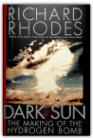
Holidays on Ice: Stories

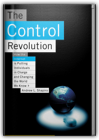
The Control Revolution: How the Internet is Putting Individuals in Charge and Changing the World We Know
Red and the Black: A New Translation Backgrounds and Sources Criticism
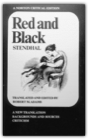
Each Norton Critical Edition includes an authoritative text, contextual and source materials, and a wide range of interpretations-from contemporary perspectives to the most current critical theory-as well as a bibliography and a chronology of the author's life and work. The War Within: America's Battle over Vietnam
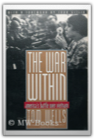
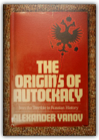
The Origins of Autocracy: Ivan the Terrible in Russian History
|


My Library
Collection Total:
1320 Items
1320 Items
Last Updated:
Apr 14, 2013
Apr 14, 2013
 Made with Delicious Library