|
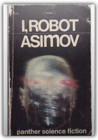
I, Robot
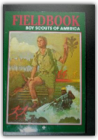
Fieldbook: Boy Scouts of America
Nordic Knitting Traditions: Knit 25 Scandinavian, Icelandic and Fair Isle Accessories

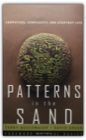
Traditional Scandinavian and Icelandic designs are given new life in the projects found in Nordic Knitting Traditions. 25 projects feature original floral, star, feather and geometric motifs, all knit in fresh and modern colors. With a diverse collection of hats, tams, mittens, gloves, socks, knee-highs and legwarmers, you'll find plenty of jaw-dropping, colorful accessories to knit for yourself and the ones you love. Inside: Thoughtful construction and full-color charts make these designs easy to knit.Variations for knitting mittens and gloves in two ways and lengthening socks into knee-highs, as well as fully charted alternative colorways, allow you to achieve customized looks.Complete the Look" instructions guide you to patterns that match, making it easy to create coordinating accessories.Tips and tricks for sizing, construction and stress-free knitting help you knit items that will become family heirlooms.Nordic Knitting Traditions celebrates the roots of stranded knitting with inspiring designs and elegant colorways. Start knitting your own piece of history today. " Patterns In The Sand: Computers, Complexity, And Everyday Life
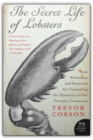
The Secret Life of Lobsters: How Fishermen and Scientists Are Unraveling the Mysteries of Our Favorite Crustacean
The Third Chimpanzee: The Evolution and Future of the Human Animal
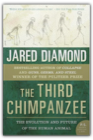
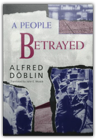
We human beings share 98 percent of our genes with chimpanzees. Yet humans are the dominant species on the planet — having founded civilizations and religions, developed intricate and diverse forms of communication, learned science, built cities, and created breathtaking works of art — while chimps remain animals concerned primarily with the basic necessities of survival. What is it about that two percent difference in DNA that has created such a divergence between evolutionary cousins? In this fascinating, provocative, passionate, funny, endlessly entertaining work, renowned Pulitzer Prize–winning author and scientist Jared Diamond explores how the extraordinary human animal, in a remarkably short time, developed the capacity to rule the world . . . and the means to irrevocably destroy it. A People Betrayed: November 1918: A German Revolution
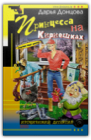
Princessa na Kirieshkah: Evlampija Romanova. Sledstvie vedet diletant #15
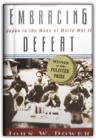
Embracing Defeat: Japan in the Wake of World War II
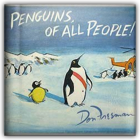
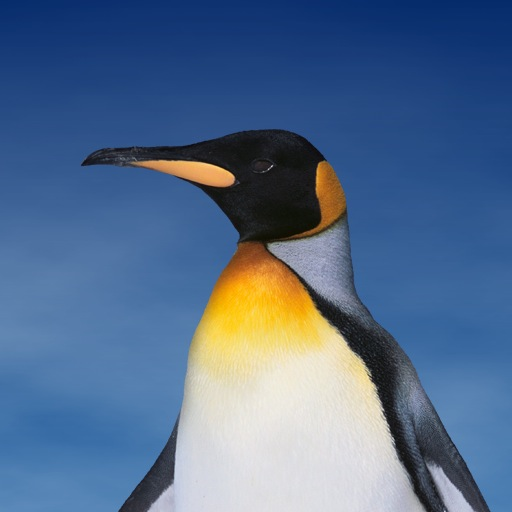
Penguins, of All People
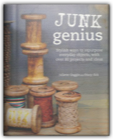
Junk Genius: Stylish Ways to Reinvent Everyday Objects
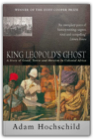
King Leopold's Ghost: A Story of Greed, Terror and Heroism
Voices: An Inspector Erlendur Novel
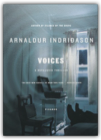
The Christmas rush is at its peak in a grand Reykjavík hotel when Inspector Erlendur is called in to investigate a murder. The hotel Santa has been stabbed to death, and Erlendur and his fellow detectives find no shortage of suspects between the hotel staff and the international travelers staying for the holidays. As Christmas Day approaches, Erlendur must deal with his difficult daughter, pursue a possible romantic interest, and untangle a long-buried web of malice and greed to find the murderer. Voices is a brutal, soulful noir from the chilly shores of Iceland. The Ghost Map: The Story of London's Most Terrifying Epidemic and How It Changed Science, Cities, and the Modern World
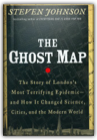
The Ghost Map takes place in the summer of 1854. A devastating cholera outbreak seizes London just as it is emerging as a modern city: more than 2 million people packed into a ten-mile circumference, a hub of travel and commerce, teeming with people from all over the world, continually pushing the limits of infrastructure that's outdated as soon as it's updated. Dr. John Snow—whose ideas about contagion had been dismissed by the scientific community—is spurred to intense action when the people in his neighborhood begin dying. With enthralling suspense, Johnson chronicles Snow's day-by-day efforts, as he risks his own life to prove how the epidemic is being spread. When he creates the map that traces the pattern of outbreak back to its source, Dr. Snow didn't just solve the most pressing medical riddle of his time. He ultimately established a precedent for the way modern city-dwellers, city planners, physicians, and public officials think about the spread of disease and the development of the modern urban environment. The Ghost Map is an endlessly compelling and utterly gripping account of that London summer of 1854, from the microbial level to the macrourban-theory level—including, most important, the human level. Watch a QuickTime trailer for this book. An Unfinished Season: A Novel
Under the Banner of Heaven: A Story of Violent Faith
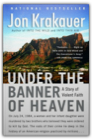
At the core of Krakauer’s book are brothers Ron and Dan Lafferty, who insist they received a commandment from God to kill a blameless woman and her baby girl. Beginning with a meticulously researched account of this appalling double murder, Krakauer constructs a multi-layered, bone-chilling narrative of messianic delusion, polygamy, savage violence, and unyielding faith. Along the way he uncovers a shadowy offshoot of America’s fastest growing religion, and raises provocative questions about the nature of religious belief. The Call of the Wild
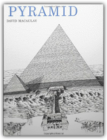
Pyramid
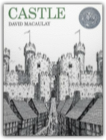
Castle
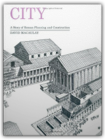
City: A Story of Roman Planning and Construction
Unbuilding

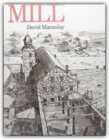
Mill
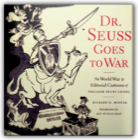
Dr. Seuss Goes to War: The World War II Editorial Cartoons of Theodor Seuss Geisel
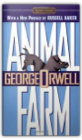
Animal Farm Publisher: Signet Classics; 50th Anniversary edition
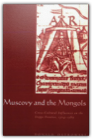
Muscovy and the Mongols: Cross-Cultural Influences on the Steppe Frontier, 1304-1589
The Botany of Desire: A Plant's-Eye View of the World
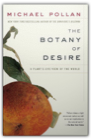
Every schoolchild learns about the mutually beneficial dance of honeybees and flowers: The bee collects nectar and pollen to make honey and, in the process, spreads the flowers’ genes far and wide. In The Botany of Desire, Michael Pollan ingeniously demonstrates how people and domesticated plants have formed a similarly reciprocal relationship. He masterfully links four fundamental human desires—sweetness, beauty, intoxication, and control—with the plants that satisfy them: the apple, the tulip, marijuana, and the potato. In telling the stories of four familiar species, Pollan illustrates how the plants have evolved to satisfy humankind’s most basic yearnings. And just as we’ve benefited from these plants, we have also done well by them. So who is really domesticating whom? The Omnivore's Dilemma: A Natural History of Four Meals
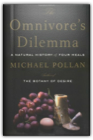
Get 15% off when you order 5 or more of this title for your book club. Simply enter the coupon code POLLANOMNIVORE at checkout. This offer does not apply to eBook purchases. This offer applies to only one downloadable audio per purchase. What should we have for dinner?" To one degree or another this simple question assails any creature faced with a wide choice of things to eat. Anthropologists call it the omnivore's dilemma. Choosing from among the countless potential foods nature offers, humans have had to learn what is safe, and what isn't—which mushrooms should be avoided, for example, and which berries we can enjoy. Today, as America confronts what can only be described as a national eating disorder, the omnivore's dilemma has returned with an atavistic vengeance. The cornucopia of the modern American supermarket and fast-food outlet has thrown us back on a bewildering landscape where we once again have to worry about which of those tasty-looking morsels might kill us. At the same time we're realizing that our food choices also have profound implications for the health of our environment. The Omnivore's Dilemma is bestselling author Michael Pollan's brilliant and eye-opening exploration of these little-known but vitally important dimensions of eating in America. Pollan has divided The Omnivore's Dilemma into three parts, one for each of the food chains that sustain us: industrialized food, alternative or "organic" food, and food people obtain by dint of their own hunting, gathering, or gardening. Pollan follows each food chain literally from the ground up to the table, emphasizing our dynamic coevolutionary relationship with the species we depend on. He concludes each section by sitting down to a meal—at McDonald's, at home with his family sharing a dinner from Whole Foods, and in a revolutionary "beyond organic" farm in Virginia. For each meal he traces the provenance of everything consumed, revealing the hidden components we unwittingly ingest and explaining how our taste for particular foods reflects our environmental and biological inheritance. We are indeed what we eat-and what we eat remakes the world. A society of voracious and increasingly confused omnivores, we are just beginning to recognize the profound consequences of the simplest everyday food choices, both for ourselves and for the natural world. The Omnivore's Dilemma is a long-overdue book and one that will become known for bringing a completely fresh perspective to a question as ordinary and yet momentous as What shall we have for dinner? A few facts and figures from The Omnivore's Dilemma: Of the 38 ingredients it takes to make a McNugget, there are at least 13 that are derived from corn. 45 different menu items at Mcdonald’s are made from corn. One in every three American children eats fast food every day. One in every five American meals today is eaten in the car. The food industry burns nearly a fifth of all the petroleum consumed in the United States—more than we burn with our cars and more than any other industry consumes. It takes ten calories of fossil fuel energy to deliver one calorie of food energy to an American plate. A single strawberry contains about five calories. To get that strawberry from a field in California to a plate on the east coast requires 435 calories of energy. Industrial fertilizer and industrial pesticides both owe their existence to the conversion of the World War II munitions industry to civilian uses—nerve gases became pesticides, and ammonium nitrate explosives became nitrogen fertilizers. ... MY BRAIN IS OPEN: The Mathematical Journeys of Paul Erdos
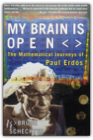
Witty and filled with the sort of mathematical puzzles that intrigued Erdõs and continue to fascinate mathematicians today, My Brain Is Open is the story of this strange genius and a journey in his footsteps through the world of mathematics, where universal truths await discovery like hidden treasures and where brilliant proofs are poetry. Fermat's Enigma: The Epic Quest to Solve the World's Greatest Mathematical Problem
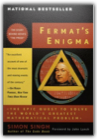
"I have discovered a truly marvelous demonstration of this proposition which this margin is too narrow to contain." With these words, the seventeenth-century French mathematician Pierre de Fermat threw down the gauntlet to future generations. What came to be known as Fermat's Last Theorem looked simple; proving it, however, became the Holy Grail of mathematics, baffling its finest minds for more than 350 years. In Fermat's Enigma—based on the author's award-winning documentary film, which aired on PBS's "Nova"—Simon Singh tells the astonishingly entertaining story of the pursuit of that grail, and the lives that were devoted to, sacrificed for, and saved by it. Here is a mesmerizing tale of heartbreak and mastery that will forever change your feelings about mathematics. Cryptonomicon
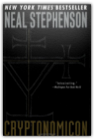
In 1942, Lawrence Pritchard Waterhouse—mathematical genius and young Captain in the U.S. Navy—is assigned to detachment 2702. It is an outfit so secret that only a handful of people know it exists, and some of those people have names like Churchill and Roosevelt. The mission of Waterhouse and Detachment 2702—commanded by Marine Raider Bobby Shaftoe-is to keep the Nazis ignorant of the fact that Allied Intelligence has cracked the enemy's fabled Enigma code. It is a game, a cryptographic chess match between Waterhouse and his German counterpart, translated into action by the gung-ho Shaftoe and his forces. Fast-forward to the present, where Waterhouse's crypto-hacker grandson, Randy, is attempting to create a "data haven" in Southeast Asia—a place where encrypted data can be stored and exchanged free of repression and scrutiny. As governments and multinationals attack the endeavor, Randy joins forces with Shaftoe's tough-as-nails granddaughter, Amy, to secretly salvage a sunken Nazi submarine that holds the key to keeping the dream of a data haven afloat. But soon their scheme brings to light a massive conspiracy with its roots in Detachment 2702 linked to an unbreakable Nazi code called Arethusa. And it will represent the path to unimaginable riches and a future of personal and digital liberty...or to universal totalitarianism reborn. A breathtaking tour de force, and Neal Stephenson's most accomplished and affecting work to date, Cryptonomicon is profound and prophetic, hypnotic and hyper-driven, as it leaps forward and back between World War II and the World Wide Web, hinting all the while at a dark day-after-tomorrow. It is a work of great art, thought and creative daring; the product of a truly iconoclastic imagination working with white-hot intensity. The Elements of Style
Beautiful Swimmers: Watermen, Crabs and the Chesapeake Bay
|

My Library
Collection Total:
1320 Items
1320 Items
Last Updated:
Apr 14, 2013
Apr 14, 2013
 Made with Delicious Library